

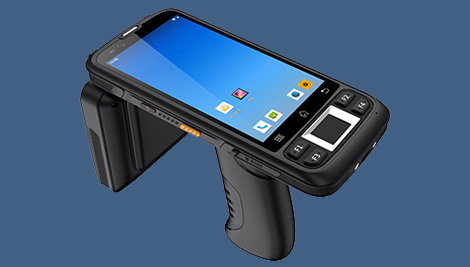
In the healthcare industry, the accuracy and efficiency of the dispensing process directly impact patient safety and medical quality. Traditional manual verification methods are susceptible to human factors, leading to issues such as information delays, cumbersome processes, and difficulties in traceability. With the maturation of IoT technology, RFID (Radio Frequency Identification) handheld devices have become core tools for optimizing dispensing workflows in medical institutions, leveraging advantages like contactless identification and rapid data interaction. This article will deeply analyze the application value of the 15m RFID handheld PDA in medical dispensing management from a functional perspective, demonstrating how it reconstructs the entire pharmaceutical management chain.
I. Core Challenges in Medical Dispensing Management
Efficiency Bottlenecks in Manual Verification
Verifying information like drug names, dosages, and batch numbers relies on manual operations, which can lead to errors during peak hours due to fatigue. Paper-based records also hinder real-time data sharing.
Risks of Traceability Gaps
During the transfer from pharmacies to wards, drug information is often recorded manually in ledgers. If medication errors or adverse reactions occur, it is difficult to quickly identify responsible links.
Lagged Inventory Management
Traditional inventory counts depend on periodic manual checks, making it impossible to track drug expiration dates or stock levels in real time. This can result in expired drug accumulations or shortages of critical medications.
Patient Safety Hazards
Special medications (e.g., high-risk or refrigerated drugs) lack dynamic monitoring during storage and use, potentially leading to medical accidents from environmental anomalies or operational errors.
II. Core Function Analysis of the 15m RFID Handheld PDA
1. Rapid and Accurate Identification: Building a "Digital ID" for Drugs
Batch Reading of Multiple Tags
The RFID handheld supports high-frequency/ultra-high-frequency dual-mode recognition, enabling simultaneous reading of multiple electronic tags on shelves, containers, or patient wristbands. With a scanning range exceeding 15 meters, drug sorting efficiency increases by 3-5 times.
Automatic Data Binding
By integrating with hospital HIS systems, the handheld automatically links attributes like batch numbers, expiration dates, and storage conditions, enabling precise "one-item-one-code" management and replacing the tedious process of scanning individual barcodes.
Optimized Anti-Interference Capability
Special algorithms filter interference signals in complex environments like metal cabinets or liquid medications, ensuring stable reading in scenarios such as refrigerators or emergency carts.
2. Real-Time Data Synchronization: Breaking Down Information Silos
Dynamic Inventory Visualization
Every drug movement (inbound/outbound) is instantly uploaded to the cloud via the handheld, generating visual heatmaps. It automatically alerts for low stock or near-expiry drugs and supports intelligent transfers between departments/wards.
Closed-Loop Medication Order Management
Nurses scan patient wristbands and drug tags during dispensing, with the system cross-referencing order data. Abnormal operations (e.g., wrong drug or overdose) trigger real-time alarms to block risks.
Mobile Collaboration
With WiFi/4G/5G multi-network switching, data syncs in real time with doctor stations and pharmacy systems, enabling cross-department remote verification and faster emergency response times.
3. End-to-End Traceability: Strengthening Medication Safety
Drug Lifecycle Tracking
Records of each step—from storage and dispensing to patient use—including timestamps, personnel, and devices, are stored in blockchain ledgers for "traceable sources, trackable destinations, and accountable responsibilities."
Anomaly Event Retrospection
In case of adverse events, historical logs on the handheld quickly locate problematic batches, operators, and related links, providing objective evidence for dispute resolution.
4. Intelligent Medication Guidance: Empowering Clinical Decisions
Standardized Usage Prompts
Built-in drug database displays indications, contraindications, and dosage instructions when tags are scanned, aiding nurses in following SOPs.
Controlled Substance Management
Implements "dual-person dual-lock" electronic controls for narcotics and psychotropics, requiring two authorized scans to unlock smart cabinets, with full audit trails.
Patient Education Extension
Generates QR codes during drug issuance; patients scan for multimedia guides on usage and precautions, improving compliance.
5. Industrial-Grade Design for Complex Medical Environments
Enhanced Protection
IP65-rated for dust/water resistance, withstands 1.5-meter drops, and supports disinfectant cleaning, suitable for operating rooms and isolation wards.
Optimized Battery Life
Large-capacity battery with fast charging enables 8+ hours of continuous use; swappable modules ensure uninterrupted operations.
Upgraded User Interface
5.7-inch HD touchscreen supports glove and wet-hand operation, with auto-brightness night mode for varying lighting.
III. Application Scenario Case Studies
Outpatient Pharmacy Scenario
Pharmacists scan prescription QR codes to locate drugs and optimize retrieval paths, reducing patient wait times.
Inpatient Ward Scenario
Nurses verify drugs and bind patient data at bedsides, syncing records instantly to nursing systems to prevent transcription errors.
Emergency Center Scenario
In ambulances or disaster sites, rapid scanning of patient IDs and emergency drugs enables "on-vehicle admission" data synchronization.
IV. Future Outlook: Evolution from Tool to Ecosystem
As medical IoT deepens, the 15m RFID handheld PDA will evolve from a standalone device to a sensory node in smart hospital ecosystems. Integration with smart cabinets and AGV robots will automate "identification-sorting-delivery-verification" cycles. Combined with 5G and edge computing, real-time data analysis will shift dispensing management toward predictive, preventive models.
Conclusion
The 15m RFID handheld PDA is reshaping the foundation of medical dispensing management with its real-time, precise, and traceable capabilities. Through functional upgrades and scenario refinement, its value has risen from a tool to a core pillar of healthcare safety systems. Future technological convergence will position it as a "digital bridge" connecting patients, drugs, and resources, injecting new momentum into smart healthcare.