

In the field of high-speed rail operation and maintenance, the precision and efficiency of equipment maintenance directly impact train operation safety. As a core carrier of IoT technology, the UHF RFID handheld PDA has become an indispensable intelligent tool in high-speed rail maintenance processes due to its non-contact data collection, rapid identification, and high reliability. This article will systematically analyze the core functional modules and practical application value of UHF RFID handheld PDAs in high-speed rail maintenance scenarios, starting from technical principles.
I. Technical Basis of UHF RFID and Hardware Advantages of Handheld Devices
UHF RFID (Ultra High Frequency Radio Frequency Identification) technology operates in the frequency band of 860MHz-960MHz and possesses the following technical characteristics:
Long-Range Identification Capability: Effective identification distance of up to 3-25 meters, significantly reducing manual scanning frequency.
Multi-Tag Concurrent Processing: Capable of simultaneously identifying 50-300 tags in a single read, suitable for densely distributed high-speed rail equipment scenarios.
Penetration Communication: Can penetrate materials like metal and liquids, adapting to complex mechanical structure inspections under high-speed rail carriages.
Data Storage Capacity: Supports EPC Class1 Gen2 protocol tags, with a user-programmable storage area of 512 bits or more.
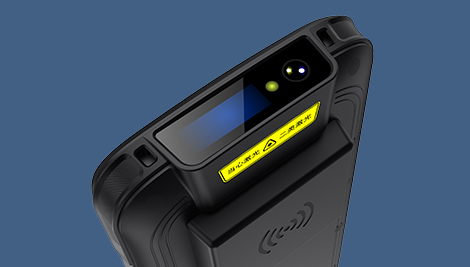
Based on these characteristics, professional-grade UHF RFID handheld PDAs are typically equipped with the following hardware modules:
High-Gain Antenna Array: Balances identification range and accuracy through directional and omnidirectional scanning mode switching.
Industrial-Grade Protection Design: IP65 dust and water resistance, 1.5-meter drop resistance, suitable for complex environments in high-speed rail maintenance workshops.
High-Speed Data Processing Chip: Features a quad-core processor for real-time tag data decoding and local filtering.
Multi-Interface Expansion Capability: Integrates USB, Bluetooth, Wi-Fi, and 4G/5G modules for instant data upload to maintenance management systems.
II. Core Functional Applications in High-Speed Rail Maintenance Scenarios
1.Dynamic Inventory of Whole-Train Equipment Assets
High-speed rail trains consist of tens of thousands of components, and traditional manual inventory methods suffer from low efficiency and missed inspections. UHF RFID handheld PDAs enable:
Rapid Documentation: Scan pre-installed RFID tags on key equipment (e.g., bogies, pantographs, traction motors) to record information like model, production date, and installation location within 3 seconds.
Dynamic Tracking: Automatically compare equipment history with current status during three-level maintenance cycles, flagging parts requiring replacement or maintenance.
Anomaly Alerts: Trigger audible and visual alarms when sudden changes in tag signal strength occur (e.g., tag detachment or equipment displacement).
2.Standardized Control of Maintenance Processes
Combined with high-speed rail maintenance standards, handheld devices can load customized operation guidance systems:
Process Guidance: Call up electronic work cards for corresponding maintenance procedures via NFC touch or QR code scanning to standardize operational steps.
Data Verification: Automatically check parameters like torque values and fluid levels at critical nodes (e.g., bolt tightening or oil refilling) to ensure compliance with standards.
Electronic Sign-off: Maintenance personnel confirm procedures via fingerprint or digital certificates, enabling full traceability of operations.
3.Non-Destructive Inspection of Hidden Areas
For hard-to-visualize regions like undercarriages and bogies, UHF RFID technology enables:
Penetrative Detection: Use flexible antennas to read tag data obscured by oil or dirt, assessing equipment corrosion levels.
Vibration Analysis: Collect equipment vibration spectra via built-in sensors (supported by some models) to assist in diagnosing bearing wear.
Temperature Monitoring: Combine with infrared temperature modules to synchronize device surface temperatures with tag IDs, building a thermal imaging database.
4.Intelligent Management of Spare Parts Warehouses
In maintenance base spare parts warehouses, handheld devices can establish a closed-loop management system:
Smart Receiving: Scan batch tags from suppliers to automatically generate inventory location codes and shelf-life alerts.
Precision Issuing: Quickly locate target spare parts via voice commands based on work order needs, preventing misplacement or omissions.
Inventory Optimization: Generate replenishment suggestions using FIFO (First-In-First-Out) algorithms based on historical consumption data, reducing inventory costs.
III. Management Efficiency Gains from Technological Advancements
Compared to traditional maintenance methods, UHF RFID handheld PDAs achieve breakthroughs in three dimensions:
Time Efficiency Improvement: Full inspection time per train reduced from 8 hours to 3.5 hours, with equipment inventory accuracy rising to 99.9%.
Labor Cost Optimization: Cut over 50% of paper document workflows and reduce reliance on experienced technical workers.
Data-Driven Decision Support: Build equipment health index models through long-term data accumulation, enabling predictive maintenance coverage of up to 75% or more.
IV. Industry Application Trends
With the integration of 5G and industrial internet technologies, UHF RFID handheld PDAs are evolving in the following directions:
Enhanced Edge Computing: Perform local image recognition and simple fault diagnosis to reduce cloud data transmission pressure.
Multi-Modal Fusion: Integrate functions like ultrasonic thickness measurement and laser ranging for "one-device multiple inspections."
AR-Assisted Visualization: Overlay equipment information and operation prompts in real-world views via Bluetooth-connected smart glasses.
Conclusion
In the intelligent transformation of high-speed rail operation and maintenance, UHF RFID handheld PDAs have evolved from simple data collection tools to core nodes connecting physical devices and digital systems. Through deep integration of functions like precise identification, real-time interaction, and intelligent decision-making, they not only reshape traditional maintenance operations but also lay the technical foundation for building a smart high-speed rail system based on full lifecycle management. With breakthroughs in domestic chips and operating systems, this technology will play an even greater role in ensuring the safe operation of high-speed rail.