

In the wave of agricultural digital transformation, the efficiency and accuracy of data collection have become critical factors constraining the development of modern agriculture. In traditional agricultural operations, crop information recording relies on manual notes or paper labels, leading to issues such as low efficiency, error-proneness, and data silos. The emergence of the smart handheld PDA scanner, through hardware innovation and scenario-based functional design, provides an efficient and reliable data collection solution for the agricultural sector. This article will start from the core functions of the device and deeply analyze its practical value in crop information collection, traceability management, warehouse logistics, and other aspects.
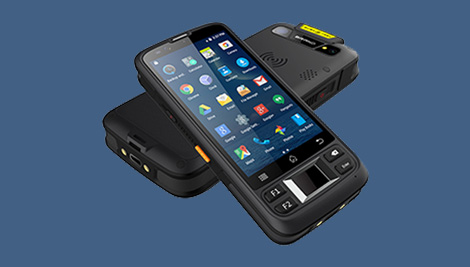
I. Efficient Data Collection: Seamless Integration from Field to Laboratory
Multi-media Compatible Scanning Engine
The smart handheld scanner is equipped with a professional-grade image capture module, supporting various encoding formats such as 1D barcodes, QR codes, and DM codes, enabling rapid identification of encoded information on different material carriers. In agricultural scenarios, whether it's plastic seedling tray labels, metal equipment numbers, or paper planting record QR codes, the device achieves millisecond-level responses. For complex field environments, the device optimizes the recognition algorithm for reflective materials, maintaining high recognition rates even if labels are soiled or under direct strong light.
Batch Collection and Automatic Verification
The device supports continuous scanning mode, allowing farmers to initiate batch collection with one click via physical buttons or touchscreens. For example, in orchard management, a single operation can continuously read 50 fruit traceability codes, with data automatically stored in chronological order. More importantly, the built-in verification rule engine can compare collected data with preset standards in real-time: when scanning non-batch crop codes, the device alerts operators through vibration feedback and red on-screen warnings, effectively preventing human errors like mixed planting or incorrect recording.
Environment-Adaptive Lighting System
For low-light environments such as greenhouses, the smart handheld PDA scanner is equipped with an intelligent fill-light module that automatically adjusts LED brightness based on ambient light intensity. In open-field operations, the laser aiming assist function precisely locates small codes, avoiding repeated scans due to sunlight interference. Test data shows that the device maintains stable operation in temperatures ranging from -20°C to 50°C and relative humidity up to 95%, covering diverse agricultural scenarios from northern greenhouses to southern orchards.
II. Data Transmission and Collaboration: Building the Neural Endpoints of Agricultural IoT
Multi-modal Data Transmission Channels
The device integrates three transmission modes—4G/5G, Wi-Fi, and Bluetooth 5.0—and can automatically switch to the optimal channel based on network conditions. In remote farmland areas, the device can cache data locally and automatically sync to cloud platforms upon entering signal coverage zones. For instance, practices at a large-scale planting base show that by networking with field relay devices via Bluetooth 5.0, daily data upload success rates increased to 99.9%, significantly improving data lag issues compared to traditional USB drive transfers.
Offline Operations and Edge Computing
For areas with unstable networks, the device has built-in 128GB storage, capable of saving over 1 million structured data entries. More notably, its edge computing capabilities enable local preprocessing operations like data cleaning and format conversion. For example, in seed quality inspection, the device can automatically compare scanned batch numbers with prestored quality standards to directly output pass/fail results, reducing backend server computational pressure.
Cross-platform Data Compatibility
The device outputs data strictly following agricultural industry standard formats, supporting exports in JSON, XML, CSV, and more. Through open API interfaces, it integrates seamlessly with mainstream farm management software. A case study from an agricultural cooperative shows that after integrating the scanner with their ERP system, crop growth data entry efficiency increased fourfold, and financial reconciliation cycles shortened from 3 days to 2 hours.
III. Durability and User-Friendly Design: Redefining Agricultural Operations
Military-Grade Protection Standards
The smart handheld PDA scanner features a PC+TPU dual-material injection-molded casing, passing a 1.5-meter drop test on concrete surfaces. With an IP65 protection rating, it resists field mud and sand intrusion. For pesticide spraying scenarios, a special coating provides corrosion resistance, tested to withstand immersion in 5% ethametsulfuron solution. The battery compartment has an independent sealed design, allowing normal operation even if accidentally exposed to water.
Long-Lasting Battery Solutions
Equipped with a 5000mAh removable lithium battery, the device operates for 10 hours in continuous scanning mode and over 15 days on standby. It supports fast charging, with 10 minutes of charging sufficient for 2 hours of high-intensity operation. In a practical application at a livestock farm, efficiency increased by 300% during 24-hour uninterrupted animal inventory by using backup battery packs, compared to traditional PDA devices.
Agricultural Scenario-Specific Optimizations
The 5.5-inch HD screen features anti-glare treatment for clear data display under strong light. Glove touch mode allows farmers to operate without removing work gloves, and physical button layouts are ergonomically designed for right-handed use. Weighing only 320 grams, it includes back clips and wrist straps for arm mounting or neck hanging, freeing hands for other farm tasks.
IV. Practical Application Scenarios
Precision Planting Management
In vegetable bases, each crop is tagged with a unique traceability code, and the scanner records data at 18 key nodes like sowing, fertilizing, and pesticide application. Timeline analysis enables precise tracing of abnormal growth cases, supporting data-driven decisions for integrated water-fertilizer systems. After implementation at a modern agricultural park, per-acre yields increased by 12%, and defect rates fell by 8%.
Agricultural Product Traceability Systems
In the farm-to-table supply chain, the scanner verifies product identity at picking, sorting, and packaging stages. Consumers scanning package codes can view growth cycle image logs, enhancing brand trust. A citrus cooperative using this system saw product premium pricing rise by 25% and repeat purchase rates grow by 40%.
Agricultural Research Data Collection
In variety breeding trials, researchers use the scanner to record plant phenotype data while synchronizing environmental parameters like temperature, humidity, and light. The built-in Beidou GPS module links geographic information, providing multidimensional data sources for breeding models. After adoption in a Chinese Academy of Agricultural Sciences project, data collection efficiency improved fivefold, and model training cycles shortened by 60%.
V. Future Evolution Directions
The current device already interfaces with agricultural drones and IoT sensors, with future advancements focusing on two areas: integrating more agriculture-specific sensors, such as real-time chlorophyll detection via external modules; and developing an agriculture-dedicated OS with prebuilt crop model libraries and farming advice engines, upgrading the scanner from a data collection terminal to an intelligent decision-making assistant.
The smart handheld PDA scanner is redefining the boundaries of agricultural data collection. Its value lies not just in replacing pen and paper, but in building a bridge between the physical world and digital agriculture. As the device evolves, a more precise, efficient, and sustainable vision of modern agriculture is unfolding.