

Driven by the wave of Industry 4.0 and smart manufacturing, the efficiency and accuracy of industrial field data collection directly determine the intelligence level of enterprise production management. As mobile terminal devices specifically designed for industrial scenarios, industrial PDAs integrate optimized hardware and collaborative software capabilities, becoming the critical link between physical production and digital systems. This article deeply analyzes the functional value of industrial field data collection PDA terminals from five core dimensions: data collection, communication transmission, environmental adaptability, operating experience, and data management.
I. Multi-Dimensional Data Collection Capabilities: Building a Precise Production Data Foundation
Barcode and RFID Dual-Mode Identification
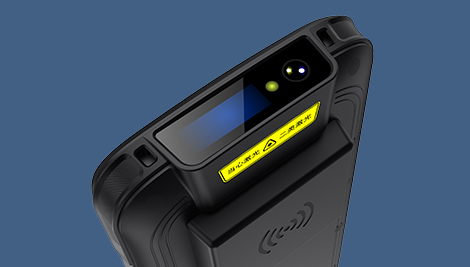
Industrial PDA terminals come standard with high-precision 1D/2D barcode scanning engines, capable of quickly reading barcodes on materials such as metal, plastic, and curved surfaces, and supporting the reading of special process barcodes like DPM (Direct Part Marking). Paired with an ultra-high frequency RFID read/write module, they enable long-distance, non-contact identification of batch tags, with a single reading distance of up to 20 meters or more, significantly improving operational efficiency in scenarios such as warehouse inventory and asset tracking.
Industrial Sensor Integration Interface
Through built-in analog/digital signal interfaces, the device can directly connect to industrial sensors for temperature, pressure, vibration, etc., collecting equipment operating parameters in real time. For example, in equipment inspection scenarios, technicians can directly read data such as motor temperature and bearing vibration values via the PDA, triggering an early warning mechanism based on preset thresholds, thus achieving closed-loop management from data collection to anomaly diagnosis.
Image Capture and Defect Detection
Equipped with an industrial-grade camera module, it supports high-definition photo and video recording. During quality inspection, operators can take photos of product appearances and perform real-time defect analysis (such as crack and scratch detection) through an edge computing module, then synchronize the results to the MES system. This replaces traditional manual visual inspection methods and increases detection accuracy by over 40%.
II. All-Scenario Communication Networking: Creating Real-Time Data Channels
Multi-Mode Wireless Communication
The device supports multiple communication protocols including 4G/5G full Netcom, dual-band Wi-Fi (2.4GHz+5GHz), and Bluetooth 5.0, ensuring stable connections in various network environments such as factories, warehouses, and outdoor areas. Especially in 5G network deployment scenarios, it can achieve end-to-end latency of less than 10ms, meeting application scenarios with high real-time requirements such as AGV scheduling and remote equipment control.
Industrial Bus Protocol Compatibility
Through expansion modules, it supports mainstream industrial bus protocols such as Modbus, Profinet, and EtherCAT, allowing direct connection to equipment like PLCs and CNC machines to achieve bidirectional transmission of production data and control instructions. For example, in production line renovation projects, the PDA can serve as a mobile human-machine interface, monitoring equipment status in real time and issuing process parameter adjustment instructions.
Self-Organizing Network and Offline Caching
With a built-in Mesh self-organizing network function, in environments without infrastructure networks, devices can automatically establish temporary communication networks among themselves, ensuring uninterrupted data transmission. At the same time, it is equipped with large-capacity storage (usually ≥64GB), supporting the caching of thousands of collection records during network disconnection. Once the network is restored, data is automatically synchronized to the cloud, ensuring data integrity.
III. Industrial-Grade Protection Design: Adapting to Harsh Operating Environments
Enhanced Three-Proof Performance
Certified to IP65/IP67 protection ratings, it can resist dust ingress and short-term water immersion impact. The casing uses military-grade PC+TPU dual-shot injection molding, with a drop resistance height of up to 1.5 meters, adapting to high-intensity usage scenarios such as warehouse handling and equipment maintenance.
Wide Temperature Operating Range
Equipped with an industrial-grade main control chip and cooling system, it can operate stably in extreme temperatures ranging from -20°C to 60°C. Specifically for cold chain storage scenarios, the device supports a low-temperature startup function, ensuring normal operation even in -10°C environments.
Explosion-Proof Certified Version
For flammable and explosive environments such as petrochemicals and coal mines, an Ex ib IIC T4 Gb explosion-proof version is available. Through intrinsically safe circuit design, the device surface temperature is controlled below the gas ignition point, while anti-static casing materials are used to meet the requirements for use in hazardous areas.
IV. Human-Machine Interaction Optimization: Enhancing On-Site Operational Efficiency
Professional-Grade Display System
It uses a 5.5-6.0 inch high-definition display, supporting glove touch and wet-hand operation, with visibility under direct sunlight reaching over 500cd/m². Some models are equipped with Corning Gorilla Glass, passing the HARNESS 7-level hardness test, capable of withstanding scratches from hard objects such as pens and screwdrivers.
Physical Buttons and Scan Triggers
Physical function buttons and a dedicated scan trigger key are retained, allowing blind operation even when wearing thick gloves. The trigger key supports custom function mapping, such as long-press to start voice input and double-click to switch data collection modes, improving single-handed operation efficiency.
Voice Interaction and Vibration Feedback
Built-in noise-canceling microphone and high-power speaker support voice command input in noisy environments. During operation confirmation, a linear motor provides multi-level vibration feedback, preventing key prompts from being missed in noisy environments.
V. Full Lifecycle Data Management: Unleashing Data Value
Edge Computing and Preprocessing
Equipped with a quad-core ARM processor and NPU acceleration unit, it can perform data cleaning, format conversion, simple logic operations, and other tasks locally. For example, it can convert raw sensor data into the standard MODBUS protocol format, reducing the processing pressure on the server side.
Data Security Mechanisms
A hardware-level encryption chip (supporting the national secret SM4 algorithm) is used to encrypt stored data and communication links throughout the entire process. It supports dual authentication via biometrics (fingerprint/face) and digital certificates to prevent unauthorized access. The data erasure function complies with the NIST SP 800-88 standard, ensuring that data is unrecoverable when the device is decommissioned.
Cloud Collaboration Platform
Through pre-installed or customized device management platforms, functions such as remote firmware upgrades, application distribution, and location tracking can be achieved. For example, a device administrator can push inspection APP update packages in batches and monitor the online status and battery level of devices nationwide.
Conclusion: The Future Evolution Direction of Industrial PDAs
With the deepening application of industrial internet platforms, data collection PDA terminals are evolving from simple data entry tools to intelligent edge terminals. Future devices will deeply integrate digital twin technology, realizing functions such as real-time mapping of equipment status and automatic issuance of predictive maintenance instructions. At the same time, through open API interfaces and low-code development platforms, enterprises can quickly build industry solutions that meet their own business needs, truly allowing data flow to create value and propelling the manufacturing industry towards a smarter and more efficient direction.