

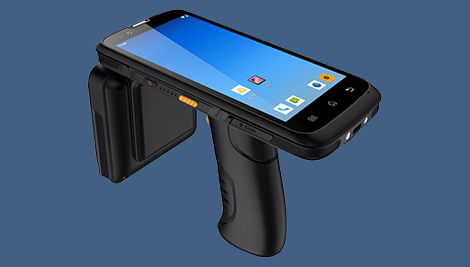
In the wave of intelligent transformation in the power industry, RFID (Radio Frequency Identification) technology has become a core support for the digitization of inspection operations. As a mobile terminal device specifically designed for power scenarios, RFID PDA handheld devices are reshaping traditional inspection models by integrating high-frequency/ultra-high-frequency reading modules, industrial-grade rugged design, and intelligent data management functions. This article delves into the industry value of this equipment from three key dimensions: core functions, application scenarios, and technical advantages.
I. Core Function Matrix for Power Inspection Scenarios
1.Multi-band RFID Precision Reading Capabilities
The device features a dual-band RFID reading module, compatible with both high-frequency (13.56MHz) and ultra-high-frequency (860-960MHz) tag identification. In substation equipment inspections, the high-frequency module enables millisecond-level data collection for reading electronic tags on precision instruments. The ultra-high-frequency module supports long-distance batch identification in outdoor settings like transmission towers and cable trenches, allowing single scans to read over 200 tags within 20 meters, significantly improving asset inventory efficiency.
2.All-Scenario Data Collection Terminal
Integrated with high-precision infrared temperature measurement, partial discharge detection interfaces, and visible-light cameras, the device achieves "one machine, multiple functions":
Infrared Temperature Measurement: Supports a wide range of -20°C to 600°C with ≤±2°C error, enabling rapid detection of abnormal temperature rises at transformer contacts and disconnect switches.
Partial Discharge Detection: Connects via dedicated interfaces to ultrasonic sensors for real-time monitoring of signals in GIS equipment and cable terminals.
Image Recording: Equipped with a 13-megapixel autofocus camera for visual documentation and defect annotation during inspections.
3.Industrial-Grade Protection and Endurance
Designed for harsh power environments, the device includes:
IP65 Protection Rating: Withstands 1.5-meter drop tests and operates stably in temperatures from -20°C to 60°C.
5000mAh Removable Battery: Features hot-swap technology for over 10 hours of continuous use, meeting all-day inspection demands.
4.Offline Inspection and Online Collaboration Modes
The built-in intelligent routing engine supports:
Offline Mode: Stores inspection data without network connectivity, automatically syncing to management platforms via Wi-Fi/4G.
Online Mode: Transmits critical data like equipment status and environmental parameters in real-time through VPN networks for remote monitoring and instant alerts.
Resumable Transfer: Automatically caches data during network interruptions and resumes transmission upon reconnection to ensure data integrity.
5.Standardized Inspection Process Engine
Features a visual task management system that enables:
Electronic Work Orders: Quickly matches inspection tasks via NFC chips, automatically loading equipment records and historical maintenance logs.
Process Navigation: Includes built-in GIS maps and voice guidance for optimal path completion of equipment checks.
Defect Closure: Generates standardized work orders with text descriptions, images, and location details upon defect discovery.
II. Deep Value Exploration in Power Inspection Scenarios
1.Enhanced Asset Management Efficiency
In a provincial power grid case study, RFID PDA implementation achieved:
Asset inventory cycles reduced from 7 days to 2 hours, with accuracy rising to 99.9%.
Full digitalization of equipment lifecycles, enabling traceability from procurement to disposal.
A 40% increase in spare parts inventory turnover, cutting annual costs by over 3 million yuan.
2.Improved Hazard Identification Quality
The device's intelligent diagnostic engine can:
Automatically classify thermal defects in infrared images, with 92% accuracy for Level III and higher defects.
Establish equipment health index (EHI) models by combining parameters like temperature, humidity, and load rates.
Generate smart diagnostic reports with risk levels and handling recommendations to aid maintenance strategies.
3.Upgraded Operational Safety Controls
Through triple safety mechanisms:
Electronic Fencing: GPS + BeiDou dual-mode positioning triggers immediate alerts for boundary breaches.
Biometric Authentication: Fingerprint and facial recognition ensure controlled operation permissions.
Behavior Analysis: Gyroscope monitoring detects device tilt angles, with automatic SOS activation during falls.
III. Technological Evolution and Industry Outlook
1.Edge Computing Enhancement
Next-gen devices will integrate lightweight AI inference chips to:
Complete over 90% of data preprocessing on-site, reducing cloud computing loads.
Develop self-diagnostic models for faults, cutting defect response times to under 0.5 seconds.
Build knowledge graphs for digital storage and reuse of inspection expertise.
2.Digital Twin Interface Integration
Via standard APIs, the device seamlessly connects to:
3D digital twin platforms for real-time equipment status mapping.
Drone inspection systems, creating integrated air-ground networks.
Robotic repair units to form "detection-diagnosis-action" closed loops.
3.Green Inspection Innovations
Aligned with carbon neutrality goals, future designs will include:
Solar-assisted power systems to extend field operation endurance.
Low-power RF designs, reducing standby consumption by 60%.
45% recyclable materials to meet RoHS environmental standards.
In the evolution toward intelligent and precise power inspections, RFID PDA handheld devices have transformed from simple data collectors into comprehensive terminals integrating IoT, big data, and edge computing. Their value extends beyond efficiency gains, restructuring inspection workflows through data flows to build robust digital defenses for grid safety. With deeper integration of 5G and industrial internet technologies, these devices will play a pivotal strategic role in constructing next-generation power systems.