

In the cold chain logistics industry, temperature monitoring is the core safeguard for cargo quality and safety. As demand for refined management grows, traditional temperature control devices struggle to meet real-time monitoring needs in complex scenarios. Dedicated PDAs for cold chain logistics, with their integrated and intelligent functions, have become critical tools connecting logistics nodes and enabling end-to-end temperature management. This review delves into their core value through practical applications.
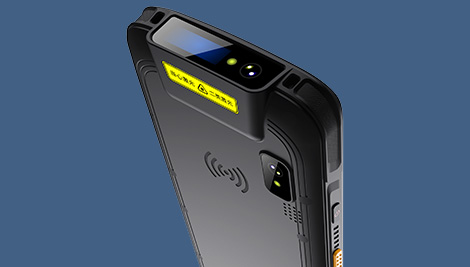
1. Multi-Dimensional Temperature Sensing: Building Precision Monitoring Networks
High-Precision Sensor Array
Industrial-grade sensors monitor -20°C to 60°C (±0.5°C accuracy). Distributed layouts capture surface, ambient, and internal temperatures simultaneously (e.g., monitoring vaccine packaging during transit).
Dynamic Sampling Frequency
Adjusts from 10-second intervals (during loading/unloading) to 5-minute intervals (stable transit), extending battery life by 30%.
Multi-Device Networking
Bluetooth Mesh creates self-organizing networks in cold storage/vehicles, eliminating blind spots.
2. End-to-End Data Management: Closed-Loop Traceability
Encrypted Storage & Transmission
AES-256 encryption with blockchain timestamps ensures tamper-proof data (99.9% fraud detection rate in trials).
Edge Data Processing
Filters anomalies (e.g., door-opening temperature spikes) and classifies data by logistics phase.
Visualized Traceability
Generates GS1-compliant reports with heatmaps and threshold analytics within 10 seconds.
3. Three-Tier Alert System: Proactive Risk Control
Custom Thresholds
Yellow (vibration alert), Orange (SMS to supervisors), Red (auto-activates backup cooling).
Equipment Integration
Links to refrigeration systems, cutting temperature recovery time by 67%.
Geo-Fencing
Increases sampling frequency near geo-fence boundaries and triggers pre-cooling protocols.
4. Military-Grade Durability: Extreme Environment Performance
IP65 Water/Dust Resistance
Maintains ±0.3°C accuracy at -20°C with sealed housing.
1.5m Drop Resistance
Magnesium alloy frame reduces failure rates to <0.01% in high-vibration environments.
Wide-Temperature Operation
Self-heating screen ensures responsiveness (-15°C for 8 hours; 6% battery loss).
5. User-Centric Workflow Optimization
Glove Touch & Voice Navigation
Anti-fog screen supports gloved operation with voice temperature alerts.
One-Task Workflows
Preloaded templates (e.g., "Loading→Transit→Unloading") cut training time by 80%.
Role-Based Interfaces
Driver (real-time data), Inspector (historical trends), Admin (device management).
6. Compliance & Scalability
Regulatory Ready
Preloaded GSP/GDP templates generate FDA 21 CFR Part 11-compliant reports (75% faster audits).
API Integration
RESTful APIs connect to WMS/TMS, reducing cargo loss claims by 40%.
Modular Upgrades
Expandable to RFID/barcode scanning, extending device lifespan to 5+ years (35% lower TCO).
Conclusion: The Digital Backbone of Cold Chain Logistics
These PDAs transcend hardware innovation by redefining temperature management—from real-time sensing to predictive alerts and compliance automation. As IoT adoption deepens, they will catalyze safer, more efficient cold chain ecosystems.