

In today's accelerating urbanization process, firefighting facilities serve as critical lines of defense for urban safety, and their effective management directly impacts the lives and property of the people. Traditional fire hydrant inspection methods rely on paper-based records and manual verification, which are not only inefficient but also pose safety risks such as data falsification and unclear accountability. With the widespread adoption of IoT technology, PDA handheld devices have become core tools for industry digital transformation, and the application of fingerprint recognition technology further enhances device security and management efficiency.
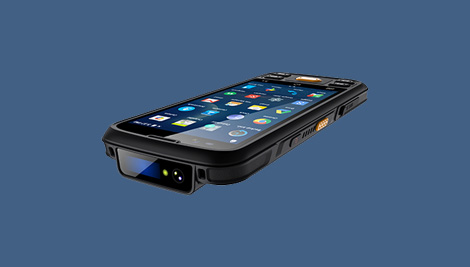
Fingerprint Recognition Technology: Building a Dual Defense for Secure Login
1.Uniqueness of Biometric Features Ensures Identity Trustworthiness
Fingerprint recognition technology is based on the unique physiological characteristics of the human body. It uses high-precision sensors to capture fingerprint ridge details and combines liveness detection algorithms to effectively prevent forgery methods such as fake fingerprint films. Compared to traditional password logins, fingerprint recognition secure login PDA handheld device technology reduces identity verification error rates to below 0.0001%, ensuring only authorized personnel can operate the device.
2.Dynamic Encryption Storage Mechanism
The device has a built-in security chip that employs the national cryptographic SM4 algorithm to locally encrypt and store fingerprint templates. Data transmission follows the TLS 1.3 protocol, eliminating the risk of information leakage throughout the process. Even if the device is lost, unauthorized physical disassembly cannot access the original biometric data.
3.Multi-Level Permission Management System
The system supports role-based permission allocation. For example, inspectors can only perform data collection and status reporting, while administrators have access to device configuration and historical record queries. The deep integration of fingerprint login and permission systems achieves a refined management model of "one person, one device, one permission."
Functional Deepening of PDA Handheld Devices in Fire Hydrant Inspection
1.Standardized Inspection Process Guidance
The device comes pre-installed with a fire facility inspection standards database, covering 32 core indicators such as appearance integrity, water pressure parameters, and valve status. After logging in via fingerprint, the system automatically pushes the day's task list and guides inspectors through standardized procedures to avoid missed or incorrect inspections.
2.Real-Time Data Collection and Anomaly Alerts
Integrated with high-sensitivity pressure sensors and image capture modules, the device instantly collects fire hydrant water pressure readings and surrounding environment photos. When abnormalities like pressure below 0.15 MPa or device damage are detected, it automatically triggers a three-level alert mechanism: on-site buzzer warning → system anomaly tagging → dispatch of rectification orders to responsible personnel.
3.Offline Cache and Resume Transmission Capabilities
For network-blind spots such as underground garages or remote areas, the device supports local storage of over 2,000 inspection records. Once the network is restored, data packets are automatically verified for integrity and retransmitted, ensuring continuous and accurate data on the monitoring platform.
4.Dedicated Durability Design
Industrial-grade triple-protection standard: IP67 rating, withstands 1.5-meter drops and temperatures from -20°C to 60°C.
Ultra-long battery life solution: 6000mAh polymer battery provides up to 12 hours of continuous operation.
Dual-mode physical buttons and touch control: Adapts to winter glove scenarios, enhancing outdoor usability.
Management Efficiency Improvement and Accountability Tracing System
1.Full-Process Electronic Record Keeping
Each inspection generates an electronic record with timestamps, geolocation, and operator fingerprint information. The tamper-proof nature of the data meets archival requirements, allowing regulatory authorities to retrieve original data from any node in real-time via the backend system.
2.Visualized Performance Analysis
Based on fingerprint login records and task completion rates, the system automatically generates personnel efficiency heatmaps, precisely identifying inefficient inspection areas and high-frequency faulty equipment. Pilot data from a city fire brigade shows that after implementation, equipment fault detection efficiency tripled, and repair response times shortened to within 2 hours.
3.Emergency Response Coordination Mechanism
When a fire alarm is triggered, the system uses fingerprint login information to quickly locate nearby on-duty inspectors, pushing the incident location and surrounding hydrant distribution maps. The device's built-in NFC module enables data exchange with fire trucks, providing advance access to facility status information.
Industry Application Prospects and Technology Evolution Directions
This solution has been deployed in 23 provinces and cities across sectors including municipal firefighting, petrochemicals, and forest fire prevention, with a mean time between failures (MTBF) of 8,000 hours. Future technology iterations will focus on:
Multi-modal biometric fusion (fingerprint + palm vein).
Enhanced edge computing capabilities for complex analyses like water quality detection.
Real-time video transmission and remote assistance under 5G private networks.
Conclusion: Innovation in Safety Management Models Empowered by Technology
The deep application of fingerprint recognition secure login PDA handheld devices marks a leap in fire facility management from "manual patrolling" to "intelligent supervision." By building a closed-loop management system of "trusted identity, controllable processes, and traceable data," it not only significantly reduces human operational risks but also provides strong technical support for urban safety operations. As IoT technology continues to evolve, such specialized smart terminals will undoubtedly play a greater role in the field of public safety.