

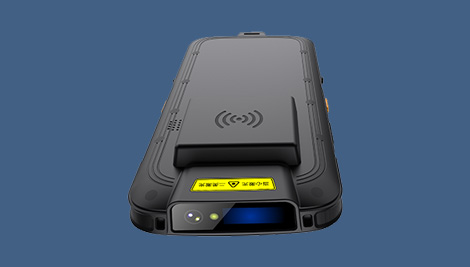
In the medical industry, drug traceability is a core element in ensuring patient medication safety. With the widespread adoption of information technology, handheld PDA barcode scanners have become essential tools for medical institutions to achieve end-to-end drug management. Compared to traditional manual recording methods, PDAs utilize barcode recognition technology to enable accurate data collection and real-time synchronization, establishing an efficient, transparent, and traceable drug management system for healthcare facilities. This article focuses on the core functions of PDA barcode scanners and analyzes their practical application value in various stages such as drug procurement, storage, distribution, and clinical use.
I. Efficient Data Collection for Building Accurate Drug Records
One of the core functions of handheld PDA barcode scanners is rapid barcode recognition and data entry. Medical institutions assign unique barcode identifiers (such as 1D or 2D codes) to each batch of drugs, enabling full-chain information binding from suppliers to patients. Operators use PDAs to scan barcodes on drug packaging, automatically reading key information like drug names, specifications, batch numbers, and expiration dates, which is then synchronized to hospital information systems (HIS) or drug management platforms.
Compared to traditional manual entry, PDAs improve data collection efficiency by over 80% and significantly reduce human error rates. For example, during drug receiving, warehouse staff scan crate barcodes with PDAs, allowing the system to automatically verify purchase orders against actual items and generate electronic receiving records, ensuring inventory accuracy. This precise data collection capability provides a reliable foundation for subsequent drug traceability.
II. Real-time Information Synchronization for Closed-loop Process Management
Another major advantage of handheld PDA barcode scanners is their wireless communication capability. Through built-in Wi-Fi or 4G/5G modules, devices can upload collected data to backend systems in real time, ensuring synchronized updates across all stages. This real-time feature is particularly critical in the following scenarios:
Medication Verification in Clinical Settings: Nurses use PDAs to scan patient wristband barcodes and drug barcodes when administering prescriptions, enabling the system to automatically match drug and patient information and prevent medication errors.
Expiration Date Alert Management: After scanning drug barcodes, the system instantly displays remaining shelf life and issues alerts for near-expiry drugs, preventing expired medications from entering clinical use.
Cold Chain Monitoring Integration: During transportation of temperature-sensitive drugs, PDAs can link with temperature and humidity sensors, recording environmental data simultaneously with barcode scans to ensure cold chain integrity.
III. User-friendly Design Tailored to Medical Environments
Medical PDAs are designed with hardware features that accommodate the unique demands of healthcare settings:
Protection Rating: Devices typically meet IP65/IP67 dust and water resistance standards, withstand alcohol-based disinfection, and are suitable for high-cleanliness areas like operating rooms and laboratories.
Battery Life: Large-capacity batteries support over 8 hours of continuous use, meeting the all-day operational needs of medical staff.
Scanning Sensitivity: High-performance scanning engines handle wrinkled or soiled medical barcodes, achieving a first-scan success rate of 99.9%.
Screen Adaptability: 5.72-inch high-definition touchscreens support glove operation, allowing healthcare workers to perform data queries and confirmations without removing gloves.
IV. Multi-dimensional Data Traceability for Strengthening Quality Control
Through barcode data collected by PDAs, medical institutions can build comprehensive drug traceability chains:
Vertical Traceability: Electronic records are maintained at every stage—from supplier qualification reviews and receipt inspections to inventory maintenance and patient use—achieving "traceable sources and trackable destinations."
Horizontal Linkage: Integrating drug barcodes with prescription and dispensing systems allows precise identification of affected patients during recalls, quickly targeting those who used problematic drugs.
Statistical Analysis: Backend systems automatically generate reports on drug consumption, expiration date distributions, and other data, supporting decision-making for procurement planning and inventory optimization.
Data from a hospital implementation shows that after adopting PDA systems, drug inventory time decreased from 4 hours daily to 45 minutes, inventory accuracy rose to 99.9%, and annual drug wastage costs fell by 37%.
V. Expanded Function Integration for Enhanced Management Efficiency
Handheld PDA barcode scanners have evolved from simple scanning tools to multifunctional mobile terminals:
RFID Modules: RFID tags on drug containers or high-value equipment enable bulk rapid inventory checks.
Cameras: Photos of drug packaging assist in authenticity verification or damage documentation.
NFC Functionality: Interaction with smart cabinets and automated dispensers allows contactless data exchange.
A specialized hospital using RFID-enabled PDAs increased inventory efficiency for controlled substances (e.g., anesthetics) by 5 times and eliminated drug diversion through location tracking.
Conclusion
Handheld PDA barcode scanners, with their accurate data collection, real-time synchronization, user-friendly design, and multi-dimensional traceability, are now central to building smart pharmacies in modern medical institutions. Their value extends beyond improving efficiency and reducing costs—they strengthen drug safety barriers through technology, safeguarding patient medication rights. As healthcare informatization advances, PDA devices will continue to evolve, offering smarter and more reliable drug management solutions.