

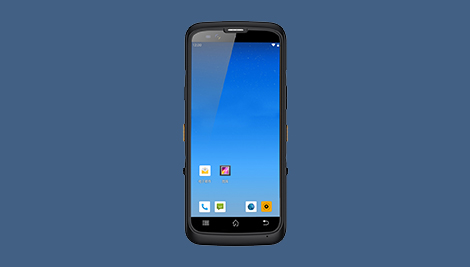
In modern urban infrastructure construction, utility tunnels serve as the underground "lifelines" of cities, carrying the crucial tasks of centralized installation and operation management for pipelines such as power, communication, and water supply/drainage. However, the internal environment of these tunnels is complex—characterized by humidity, dust, confined spaces, and safety hazards—imposing stringent demands on the reliability of inspection equipment. Drop-proof, waterproof, dustproof PDA handheld devices, with their exceptional protective performance and efficient scanning capabilities, have become indispensable tools in tunnel inspection. This article delves into their value in utility tunnel inspection from four aspects: environmental challenges, equipment protection, scanning technology, and application scenarios.
I. Environmental Challenges in Utility Tunnel Inspection
Utility tunnels are typically located 15 to 20 meters underground, with the following environmental characteristics:
Humidity and Dust: High air humidity inside tunnels, with potential water seepage in some areas. Construction residue dust and particles from aging pipelines accumulate easily, requiring high sealing standards for equipment.
Confined Spaces and Poor Lighting: Tunnel passages are often less than 2 meters wide, requiring inspectors to crouch or sidestep through certain sections. Natural light cannot penetrate, relying solely on artificial lighting, which can interfere with scanning.
Vibration and Drop Risks: Inspectors must climb ladders or navigate obstacles, increasing the likelihood of accidental drops. Nearby construction or vehicle vibrations can also impact equipment.
Unstable Network Signals: Underground environments significantly affect wireless signal transmission, with potential dead zones demanding offline data storage capabilities.
II. PDA Handheld Device's Triple Protection Design: Drop-proof, Waterproof, Dustproof
To address these challenges, drop-proof, waterproof, dustproof PDA handheld devices achieve environmental adaptability through the following technologies:
1. Drop-proof Design
Materials and Structure: High-strength engineering plastics and metal alloy frames are used, with cushioning rubber pads at key points to withstand drops from 1.2 to 1.5 meters.
Screen Protection: Equipped with Corning Gorilla Glass or similar materials for superior scratch and impact resistance; some models support touch operation with wet hands or gloves.
Internal Reinforcement: Motherboards feature reinforced brackets, and core components like scanning engines and battery modules are secured with shock-absorbing materials to reduce drop damage risks.
2. Waterproof Design
IP65/IP67 Protection Rating: Devices meet sealing standards for short-term submersion in deep water, adapting to scenarios like tunnel seepage or temporary flooding.
Interface Protection: Charging ports and headphone jacks use waterproof covers or magnetic designs to prevent liquid ingress.
3. Dustproof Design
Fully Sealed Structure: Gaps in the device body are sealed through ultrasonic welding or gaskets to prevent dust from entering the motherboard area.
Heat Dissipation Optimization: Graphene heat dissipation films or miniature fans ensure efficient cooling while maintaining sealing, avoiding overheating from dust accumulation.
III. Scanning Function: Efficient, Accurate, and Adaptable to Complex Scenarios
In utility tunnel inspection, scanning functions are primarily used for equipment identification, inspection record uploads, and hazard reporting. Drop-proof, waterproof, dustproof PDA handheld devices achieve high-efficiency scanning through the following technologies:
1. Professional Scanning Engine
Fast Decoding: High-performance 2D scanning engines support one-dimensional codes (e.g., Code 128, EAN-13) and two-dimensional codes (e.g., QR Code, Data Matrix), with decoding speeds as low as milliseconds, far exceeding smartphone camera scanning efficiency.
Wide Depth of Field and Field of View: Scanning ranges up to 10 meters eliminate frequent distance adjustments; support for tilted scanning (up to ±45° offset) adapts to unfixed label positions in tunnels.
Low-Light Optimization: Equipped with auxiliary LED lighting and laser aiming frames for precise barcode location even in dim conditions.
2. Anti-Contamination Capability
Stain Recognition Algorithm: Image enhancement technology penetrates surface stains (e.g., oil, mud) to read barcodes accurately.
High-Contrast Scanning: Dynamic threshold adjustment addresses faded or reflective labels in tunnels, improving recognition rates for damaged barcodes.
3. Offline and Synchronization Functions
Local Data Storage: Large internal storage caches thousands of inspection records, ensuring data integrity during network outages.
Batch Upload and Sync: Automatically synchronizes offline data to backend systems via Wi-Fi or 4G/5G networks, reducing manual operation time.
4. Customizable Function Expansion
QR Code Label Management: Integrates with tunnel equipment management systems for quick access to device records (e.g., installation dates, maintenance logs, ownership details) via scanning.
Hazard Reporting Process: Inspectors scan to fill forms, upload images/videos, and generate automated work orders pushed to responsible parties for closed-loop management.
IV. Application Scenarios and Case Studies
1. Equipment Inspection and Asset Management
Scenario: Equipment in tunnels (e.g., distribution cabinets, pumps, valves) bears unique QR code labels; inspectors scan to view parameters, maintenance history, and upload current status.
Case: An eastern district utility tunnel deployed QR codes at over 800 facility points, enabling citizens and inspectors to report hazards via scanning—automatically notifying responsible parties to create a "public supervision + professional operation" model.
2. Construction Supervision and Quality Traceability
Scenario: During tunnel expansion or repairs, scanning records material batches and worker information to ensure compliance with design standards.
Case: In a city tunnel renovation project, PDA scanning logged installation times and quality reports for each pipe section, allowing barcode-based traceability for accountability.
V. Future Development Trends
AI-Enhanced Scanning: Integrates image recognition for automatic barcode repair and multi-code reading.
5G and Edge Computing: Devices transmit high-definition scan data in real-time via 5G networks, with edge nodes for rapid processing to improve response speeds.
Modular Design: Customizable PDAs with interchangeable scanning modules (e.g., for long-range or low-temperature environments) tailored to different tunnel needs.
VI. Conclusion
Drop-proof, waterproof, dustproof PDA handheld devices, with their triple protection and efficient scanning, are core tools for modern urban utility tunnel inspection. They resolve inefficiencies and data loss in traditional methods while driving intelligent transformation through digital means. As technology advances, PDAs will play a larger role in underground space management, providing robust support for urban safety operations.