

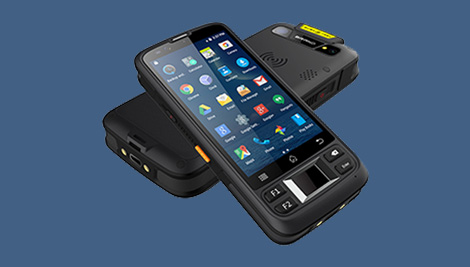
In warehouse services and logistics management, the efficiency and accuracy of data collection directly impact operational costs and customer satisfaction. With the evolution of mobile terminal technology, Android-based smart PDA terminals have become core tools in modern warehousing due to their openness, flexibility, and functional scalability. This article focuses on their core feature—barcode scanning—exploring its technical breakthroughs and application value in inventory management and goods tracking.
I. Core Advantages of Scanning Technology: Efficiency to Precision
High-Speed Recognition & Multi-Code Compatibility
Android PDAs feature professional-grade scanning engines that decode 1D codes (Code128, EAN-13), 2D codes (QR, Data Matrix), and specialized formats (e.g., DPM codes). Optimized image processing enables 0.2-second captures even with damaged, reflective, or low-light barcodes. Example: Scanning an item during receiving automatically matches SKU data in the system, enabling zero-delay "scan-to-record" operations.
Auto-Focus & Anti-Shake Technology
Advanced models integrate auto-focus cameras and electronic image stabilization. When operators move rapidly, the system adjusts focus and compensates for vibrations—critical for conveyor sorting, reducing alignment fatigue.
Batch Scanning & Data Grouping
Custom software enables continuous scanning with auto-grouping. E.g., during stocktakes, PDAs categorize scans by shelf zone and generate real-time reports. RFID hybrid models further accelerate full-warehouse cycles via "scan-then-batch-verify" workflows.
II. Scanning in End-to-End Warehouse Workflows
Inbound Management
Scan goods against supplier ASNs upon arrival. The system auto-flags PO/receipt discrepancies and triggers alerts. During putaway, scanning item and location barcodes syncs "product-to-bin" mappings in WMS.
Picking & Dispatch
Guided by FIFO/batch rules, Android PDAs optimize pick paths (e.g., prioritizing high-turnover items). Post-pick scans prevent shipping errors by verifying order matches.
Dynamic Inventory Counting
Unlike traditional shutdown audits, Android PDAs enable "cycle counting during operations." Threshold-based triggers (e.g., low-stock SKUs) push tasks to zone staff. Real-time cloud sync cuts stocktake time from days to hours.
Cargo Tracking & IoT Integration
Scanned outbound barcodes initiate TMS tracking. GPS/BDS positioning and node verification update real-time location. Breaks in scan chains trigger anomaly alerts to responsible personnel.
III. Android’s Openness & Customization
Industry-Specific Adaptations
Cold Chain: Integrated temperature sensors log environmental data to blockchain.
Cross-border: Multi-language barcode parsing + HS code auto-mapping.
Hazardous Materials: Scan-triggered MSDS retrieval + geofence alerts.
System Integration via APIs
Seamless ERP/WMS/TMS connectivity transforms scans into process triggers. E.g., scanning outbound barcodes auto-generates invoices and emails clients.
IV. Future Tech Evolution
Hardware Innovations
Sub-15mm ultrathin designs, IP67-rated durability (cold storage/outdoor use), and voice-activated scanning.
Software Intelligence
Predictive maintenance via scan-failure analytics and edge computing for reduced cloud latency.
V. Case Study: 3PL Efficiency Gains
A leading 3PL provider achieved:
60% faster inbound verification + 35% labor cost reduction
99.9% inventory accuracy (from 92%)
80% fewer mis-picks + 99.9% on-time delivery
Conclusion
Android smart PDAs transcend "data entry tools" to become physical-digital nexus points in warehousing. Through hardware refinement, algorithmic upgrades, and system integration, they redefine inventory and tracking operations. Selecting an adaptable, scalable Android PDA is pivotal for building intelligent warehouse ecosystems.