

In the wave of digital transformation in the retail industry, handheld PDA devices have become key tools for enhancing store operational efficiency. Compared to traditional manual management methods, PDAs achieve digital reconstruction of inventory management, sales services, employee scheduling, and other aspects through integrated technologies such as barcode scanning, RFID identification, and wireless communication. This article delves into the core functions and application value of retail store PDA inventory management handheld devices in retail scenarios, providing practical references for store managers.
I. Real-time Inventory Management: From Data Silos to Precision Control
1.1 Dynamic Inventory Update Mechanism
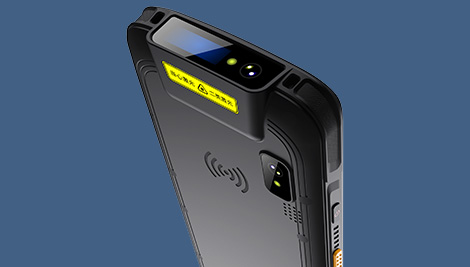
PDA devices utilize built-in high-precision barcode scanning engines (supporting 1D/2D codes) or RFID modules to achieve product information reading in 0.3 seconds. When store staff scan product barcodes, the retail store PDA inventory management handheld device automatically links to the backend database, retrieves real-time data on price, specifications, and stock levels, and synchronizes the operation results to cloud systems via 4G/5G or Wi-Fi 6 networks. A chain supermarket test showed that using PDAs reduced inventory data delays from 2 hours in traditional models to within 15 seconds, while out-of-stock rates dropped by 40%.
1.2 Smart Stocktaking and Error Control
Traditional manual stocktaking faces three major pain points: paper records are easily lost, cross-shelf verification is time-consuming, and fatigue leads to data errors. PDA solutions include:
Dynamic Stocktaking Mode: Staff can scan products by shelf area, with the system automatically comparing actual quantities to system records and highlighting discrepancies in real time.
Anti-misscan Mechanism: Alarms trigger for repeated scans of the same product to avoid double-counting.
Batch Management: By scanning production date barcodes, the system automatically identifies near-expiry goods and generates promotion lists.
A fashion brand store reported that after introducing PDAs, full-store stocktaking time was cut from 8 hours to 2.5 hours, accuracy reached 99.9%, and annual labor costs were reduced by over ¥150,000.
II. Omni-channel Order Coordination: Breaking Down Store-Warehouse Barriers
2.1 Smart Replenishment System
When inventory levels hit preset thresholds, PDAs automatically trigger a three-level replenishment mechanism:
Store-level Alerts: Prompt staff to submit urgent replenishment requests via the device.
Regional Warehouse Optimization: The system analyzes inventory across nearby stores to initiate inter-store transfers.
Central Warehouse Linkage: Standardized distribution from main warehouses to stores within 24 hours.
A convenience store chain reduced hot-selling item out-of-stock rates from 12% to 3% and cut inventory turnover days by 10 days using this feature.
2.2 O2O Order Fulfillment
For online orders, the retail store PDA inventory management handheld device supports:
Rapid Picking: Scanning order barcodes to automatically plan optimal pick paths.
Shelf-life Validation: Automatically identifying production dates to block expired goods from shipping.
Exception Handling: Marking out-of-stock items and pushing substitute suggestions.
A beauty brand achieved "online ordering, in-store delivery within 1 hour" with PDAs, boosting on-time order fulfillment to 99%.
III. Service Scenario Enhancement: From Transaction Tool to Experience Engine
3.1 Mobile Checkout and Payment Innovation
PDAs integrate multiple payment methods like magnetic stripe cards, NFC, and QR codes, enabling:
Offline Transactions: Temporarily store transaction data during network outages, with auto-sync upon recovery.
Installment Payments: Connect to financial APIs for real-time consumer installment approvals.
Member Prepay: Scan membership card barcodes for automatic point deductions.
A 3C electronics store calculated that PDA checkout efficiency increased by 300% versus traditional POS systems, with peak-hour queue times cut by 40%.
3.2 Customer Interaction Upgrade
Staff can use PDAs for:
Precision Marketing: Pulling member purchase histories to push relevant product recommendations.
Instant After-sales: Scanning return item barcodes to verify purchase info, completing returns in 10 seconds.
Service Feedback: Pushing satisfaction surveys post-transaction, with data aggregated in real time to headquarters.
A maternal-child chain saw member repurchase rates rise by 25% and average order value grow by 18% using this function.
IV. Hardware Adaptation: Custom Designs for Retail Scenarios
4.1 Industrial-grade Protection Standards
For retail environments, mainstream retail store PDA inventory management handheld devices feature:
IP65/IP67 Protection: Functional after 30-minute immersion in 1-meter-deep water.
Corning Gorilla Glass: Withstands 1.8-meter drop impacts.
Low-temperature Tolerance: Stable operation in -20°C cold-chain settings.
A fresh supermarket deploying PDAs in -10°C cold storage reported device failure rates below 0.1%, far outperforming consumer-grade devices.
4.2 Battery Life and Interaction Optimization
5000mAh Battery: Supports 12 hours of continuous scanning.
Fast Charging: 15-minute charge for 4 hours of use.
Glove Mode: Touchscreen operation with medical-grade rubber gloves.
A warehouse-style store measured over 200 daily receiving orders per PDA, cutting labor costs by 50%.
V. Industry Application Case Studies
5.1 Fashion Retail: Multi-SKU Management Breakthrough
A fast-fashion brand facing annual 300,000-item transfer demands deployed RFID-equipped PDAs to achieve:
Batch Scanning: Reading 500 garment details in 5 seconds.
Smart Display: Scanning hanger RFID tags to auto-update display positions.
Anti-theft Alerts: Triggering alarms for unpaid items passing through gates.
This project boosted store stocktaking efficiency by 80% and reduced theft losses by ¥2 million/year.
5.2 Convenience Stores: Full-time Operation Support
A 24-hour convenience store used PDAs for:
Night Mode: Low-brightness screens with vibration alerts to avoid light pollution.
Fresh Food Management: Scanning expiration barcodes to calculate best-use periods.
Emergency Replenishment: Calling third-party instant delivery via PDA during overnight hours.
Post-implementation, fresh food wastage fell by 65% and nighttime sales rose by 32%.
Conclusion
Under dual pressures of consumer experience upgrades and operational cost control, PDA devices have become essential tools for retail store digital transformation. By integrating real-time data flows, smart decision support, and scenario-adapted hardware, they not only resolve efficiency bottlenecks in traditional management but also build digital bridges between stores, consumers, and supply chains. As technologies like 5G and edge computing deepen integration, retail store PDA inventory management handheld devices will continue evolving into "digital nerve centers" for retailers, driving the industry toward greater efficiency and intelligence.