

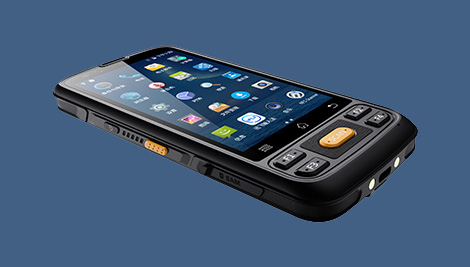
Driven by the dual forces of e-commerce growth and instant delivery demands, the express delivery industry is undergoing a transformation from scale expansion to quality enhancement. As a core node connecting warehousing, transportation, and end consumers, the efficiency and accuracy of last-mile delivery directly impact user experience and operational costs. The express delivery PDA sign-off device, with its professional functional design, has become a key tool in redefining logistics end-point workflows. This article analyzes how this device empowers the express delivery industry through technological innovation from eight core functional dimensions.
I. Full-Scenario Data Capture Capability
The express PDA device integrates multi-modal data capture modules, supporting high-speed recognition of 1D/2D barcodes. By optimizing scanning engine algorithms, it can capture standard express waybill information within 0.2 seconds. For special scenarios, the device is equipped with DPM code recognition technology, enabling it to read laser-engraved barcodes directly marked on package surfaces, meeting the handling needs of unlabeled goods in e-commerce return and exchange scenarios. In cold chain logistics scenarios, the device maintains normal operation at -20°C by adding an infrared scanning window, ensuring data integrity during fresh produce sign-off.
II. Real-Time Data Synchronization System
With a built-in 4G/5G dual-mode communication module and edge computing technology, the device uploads scanned data to logistics management systems within seconds. In remote areas or unstable network conditions, it automatically activates offline caching mode, transmitting critical node data first once the network recovers. Tests by a major express company show that real-time synchronization reduced data lag at end-point outlets from an average of 45 minutes to 8 seconds, improving financial reconciliation efficiency by 300%.
III. Electronic Sign-off Verification System
The express delivery PDA sign-off device supports dual verification modes: biometric identification and electronic signatures. Recipients can verify identity via fingerprint recognition or facial comparison, with the system automatically generating electronic sign-off certificates linked to tracking numbers. For corporate clients, the device integrates enterprise legal certificate verification, confirming recipient qualifications by scanning business license QR codes. A business express brand using this feature saw mis-signed and proxy sign-off disputes drop by 92%, shortening accounts receivable confirmation cycles from 7 days to 2 hours.
IV. Intelligent Handling Mechanism for Abnormal Parcels
When scanning damaged, rejected, or other abnormal parcels, the device automatically triggers an intelligent handling process: the image capture module photographs the goods' condition, the system compares it with original shipping photos to generate a discrepancy report, and simultaneously pushes it to customer service to create a work order. For cash-on-delivery scenarios, the device includes an NFC payment module supporting multiple channels like UnionPay, Alipay, and WeChat, with transaction data recorded on-chain for fund security. A regional express network reported that abnormal parcel handling time improved from 48 hours to 15 minutes.
V. Multi-Modal Positioning Navigation
Equipped with Beidou/GPS dual-mode positioning chips and base station positioning technology, the device provides meter-level accuracy location services. In delivery route planning, the system dynamically adjusts paths based on real-time traffic data, guiding couriers to optimal routes through vibration feedback. For large campus scenarios, it supports Bluetooth beacon positioning for precise guidance to specific building units. Tests in an urban delivery network showed this feature increased daily deliveries from 120 to 180 parcels while reducing mileage by 23%.
VI. Industrial-Grade Durability Design
The device uses a magnesium-aluminum alloy frame and Corning Gorilla Glass, passing 1.8-meter drop tests and IP67 waterproof certification. In northern winters at -30°C, the built-in self-heating module ensures screen touch sensitivity. For high-frequency use, it features a 5000mAh replaceable battery with QC4.0 fast charging, reaching 80% capacity in 30 minutes. A two-year usage report from an express outlet showed failure rates below 0.3%, with maintenance costs 78% lower than consumer-grade devices.
VII. Intelligent Power Management System
With a low-power chipset and adaptive screen brightness technology, the device dynamically allocates computing resources based on operational scenarios. In standby mode, it shuts down non-core modules, enabling up to 16 hours of continuous operation. Via USB PD 3.0 protocol, it can charge other terminals, serving as a mobile power hub. A cross-border logistics firm found this reduced end-point device numbers by 40% and cut electricity costs by 55%.
VIII. Open System Architecture
Based on a logistics-specific OS customized from Android 12/15, the device pre-installs WMS/TMS system interfaces for seamless ERP integration. Through a visual development platform, companies can configure over 200 business logics, such as triggering temperature alerts for fresh deliveries or enforcing video recording for valuable item sign-offs. A third-party logistics provider customized it to integrate with smart locker systems, boosting contactless delivery rates to 65%.
As the express industry advances toward high-quality development, the professional evolution of last-mile devices is reshaping competitiveness. By integrating eight core functions, the PDA sign-off device has transformed from a simple data capture tool into an intelligent terminal covering the full "sign-off-verification-abnormal handling-data closure" process. With deeper integration of 5G and industrial internet technologies, it will continue to drive innovation in logistics end-point operations, providing key support for building a smart logistics ecosystem. Future directions include self-learning adaptive systems and richer IoT interfaces to empower the industry's digital transformation.