

In an era dominated by digital transformation, businesses are relentlessly pursuing greater efficiency in warehouse logistics.Managing the rapid movement, precise tracking, and optimal organization of massive inventories has become a critical challenge.Traditional manual processes and barcode systems now struggle to meet modern demands.Enter RFID Ultra High Frequency (UHF) handheld scanners—a game-changing technology redefining warehouse operations with unparalleled speed, accuracy, and automation.Let’s explore how this innovation tackles logistics pain points and drives enterprise-wide upgrades.
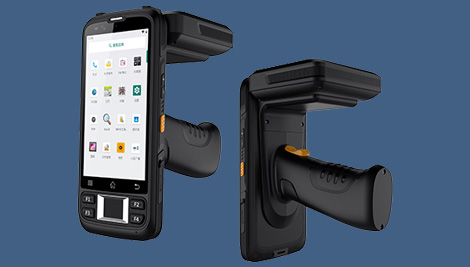
1. Why RFID UHF Handheld Scanners Are a Technological Leap
Combining advanced radio frequency identification (RFID), data processing, and wireless connectivity, UHF handheld scanners act as "smart sensors" that transmit data via electromagnetic waves. Unlike barcode scanners requiring line-of-sight alignment, RFID devices capture multiple tags simultaneously from several meters away—even in dusty, dark, or high-speed environments.
Key Advantages Over Barcodes:
Non-Line-of-Sight Scanning: Read tags through packaging, pallets, or even from a moving forklift.
Multi-Tag Capture: Instantly process hundreds of items in seconds.
Environmental Resilience: Unaffected by lighting, dirt, or poor conditions.
2. Solving 4 Critical Warehouse Challenges
Challenge 1: Time-Consuming Inventory Audits
Manual barcode scans take days and risk human error.
Solution: RFID scanners perform wall-to-wall warehouse audits in hours, auto-updating inventory counts in real time. A global retailer reduced annual stocktakes from 72 hours to 8 hours per facility.
Challenge 2: Lost or Mismatched Shipments
Tracking goods in complex warehouses is like finding a needle in a haystack.
Solution: Pair scanners with GPS-like tag localization to pinpoint items within centimeters. A logistics giant cut misroutes by 85% after deployment.
Challenge 3: Data Entry Errors
Manual input creates costly inaccuracies.
Solution: RFID automates data capture with 99.9% accuracy, eliminating keying mistakes. A pharmaceutical distributor slashed compliance audit failures by 90%.
Challenge 4: Clunky Workflows
Multi-step processes slow operations.
Solution: One-touch scanning streamlines receiving, picking, and shipping. Workers at an auto parts supplier now process 40% more orders daily.
3. Core Benefits Driving ROI
Lightning-Fast Speed: Batch-scan 500+ tags per minute—10x faster than barcodes.
Military-Grade Accuracy: Near-zero error rates even in chaotic environments.
All-Terrain Performance: Reads tags on metal, liquids, or moving objects.
Future-Ready Integration: Syncs with ERP, WMS, and IoT platforms for end-to-end visibility.
4. Real-World Success Stories
E-Commerce Giant: Boosted inventory turnover by 30% and cut storage costs by 20% using RFID-powered dynamic slotting.
3PL Provider: Achieved 95% on-time delivery rates by tracking shipments across 50+ warehouses.
Apparel Retailer: Reduced overstock by 25% through AI-driven demand forecasting fed by RFID data.
Case Study Highlight: A food distribution center eliminated 12 hours/week of manual reconciliation by automating temperature-sensitive product tracking via RFID-enabled pallets.
5. Selecting the Right RFID UHF Solution
Top 3 Criteria:
Performance: Prioritize ≥5-meter read range, ≥700 tags/second throughput, and compatibility with EPC Gen2 standards.
User Experience: Look for ruggedized designs (IP65+ rating), 12+ hour battery life, and intuitive Android interfaces.
Support: Ensure 24/7 technical assistance and API access for custom integrations.
6. The Future: AI + RFID = Intelligent Warehouses
Emerging trends include:
Predictive Analytics: AI models analyze RFID data to forecast stockouts and optimize replenishment.
Autonomous Drones: RFID-equipped UAVs perform autonomous cycle counts in sky-high racks.
Blockchain Integration: Secure, immutable audit trails for high-value assets.
Ready to Transform Your Warehouse?
Is your business struggling with outdated logistics tech? Contact us for a free RFID readiness assessment. Share your challenges below, and we’ll demonstrate how UHF scanners could cut your operating costs by up to 40%—just like they did for 1,200+ facilities worldwide.
What’s Your Experience?
Have you deployed RFID in your supply chain? Leave a comment with your results or questions!