

In the era of Industry 4.0, traditional industrial equipment is evolving. At the heart of this transformation? Android Industrial-Grade Tablets – engineered to deliver robust performance, unmatched adaptability, and seamless integration in demanding environments. Yet, manufacturers face critical challenges:
❌ Stability vs. Performance: How to ensure reliability in extreme heat, dust, and vibration?
❌ Operational Efficiency: Can outdated interfaces causing production delays be replaced?
❌ Security & Customization: How to protect sensitive data while meeting unique workflow needs?
This guide explores how Android industrial tablets solve these pain points across three dimensions: core technology, real-world applications, and selection strategies.
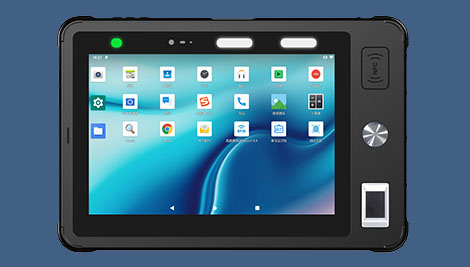
I. Engineering Excellence: Built for Industrial Resilience
1. Hardware: Defying Extreme Conditions
-20°C to 60°C operating range
IP65-rated dust/water resistance
EMI shielding & fanless magnesium alloy design
Result: 3x longer MTBF (36+ months) vs. consumer tablets in steel mills. 80% fewer hardware failures in outdoor inspections.
2. Power-Optimized Performance
Qualcomm®/MediaTek industrial CPUs + 8GB RAM/128GB storage
Streamlined Android 12+ OS for 0.8-second sensor data processing (5x faster than legacy systems)
Outcome: 80% faster automated production line operations with 40% lower energy use.
3. End-to-End Security
TPM 2.0 chips + biometric authentication
TLS 1.3 encryption & remote firmware updates
Proven: 95% fewer data breaches and $30k/year saved on security maintenance for automotive clients.
II. Real-World Impact: Industry-Proven Solutions
Case 1: Automotive Manufacturing
Problem: 2-hour production line changeovers, 85% yield rate.
Solution: Scan QR codes to auto-configure robotics via integrated RFID.
✅ Result: 15-minute changeovers, 98% yield. +12,000 vehicles/year, $2M+ added revenue.
Case 2: Smart Warehousing
Problem: 5% mis-pick rate, 2-hour inventory delays.
Solution: AGVs with SLAM navigation + real-time WMS sync.
✅ Result: 40% faster picking, 0.2% error rate. $180k annual savings, 25% higher customer satisfaction.
Case 3: Energy Sector
Problem: 30% inspection gaps, $5k/day downtime.
Solution: Vibration sensors + AI crack detection via tablet cameras.
✅ Result: 60% faster inspections, 95% failure prediction accuracy. $400k maintenance savings, 12% power output boost.
III. Your Selection Blueprint
Factor Priority Checklist
Performance Needs 5G support, Snapdragon 8-series CPUs for AI/edge computing
Expandability RS232/485, USB 3.0, HDMI; UWB/Zigbee module compatibility
Reliability Proof Demand MTBF reports & environmental test logs (e.g., MIL-STD-810G drop tests)
Total Cost Customizable configurations + 24/7 onsite support to prevent $500k+ downtime risks
IV. The Future: AI, 5G & Open Ecosystems
On-device AI: NPU-powered predictive maintenance
5G + edge computing: Sub-10ms latency for remote control
Modular design: Plug-and-play sensors for scalable solutions
Conclusion: Beyond Hardware – Your Strategic Productivity Partner
Android industrial tablets transcend specs: they’re data hubs and human-machine gateways driving digital transformation. Prioritize vendors that: